Technology
Smart Home & AV in Sharon Woods
Networks, lighting, audio, and cinema — designed before drywall, in houses that were wired for a black-and-white television.
A mid-century house has masonry exterior walls, plaster or early drywall, and no pathways. Retrofitting technology into it after the fact is expensive, ugly, or both. Doing it during a renovation costs a fraction and disappears entirely.
This page is the argument for planning the technology at the same time as the plumbing.
The network is the foundation
Everything else fails if the network does. In houses of this construction the mistake is assuming a single consumer router will cover it — brick, plaster, and foil-faced insulation are all hostile to wireless.
The correct approach is boring and durable: hardwired category cable to every likely device location, ceiling-mounted access points placed by coverage modelling rather than convenience, a managed switch in a ventilated rack, and wired backhaul between everything.
- Structured cabling to every room, run during framing
- Ceiling access points sited for coverage, not for the closet
- A properly ventilated equipment location — not a hall closet
- Hardwired backhaul; mesh only where cable genuinely cannot go
- Segmented networks separating family devices from cameras and controls
- Redundant internet for households that work from home
Lighting control
The highest-satisfaction system in most houses, and the one people underestimate. Scene-based control across a whole floor, correct dimming on every fixture type, and exterior lighting on schedule change how a house feels far more than another screen does.
In a canopied neighborhood the exterior layer matters especially: uplighting mature oaks is the single most transformative exterior improvement available in Sharon Woods, and it costs less than most people assume.
Audio
Distributed audio — architectural in-ceiling speakers zoned by room, with outdoor zones for the porch and terrace — is the system families use daily. Specify it early: speaker locations affect framing, and the difference between a well-placed pair and a compromise pair is audible forever.
Home cinema and media rooms
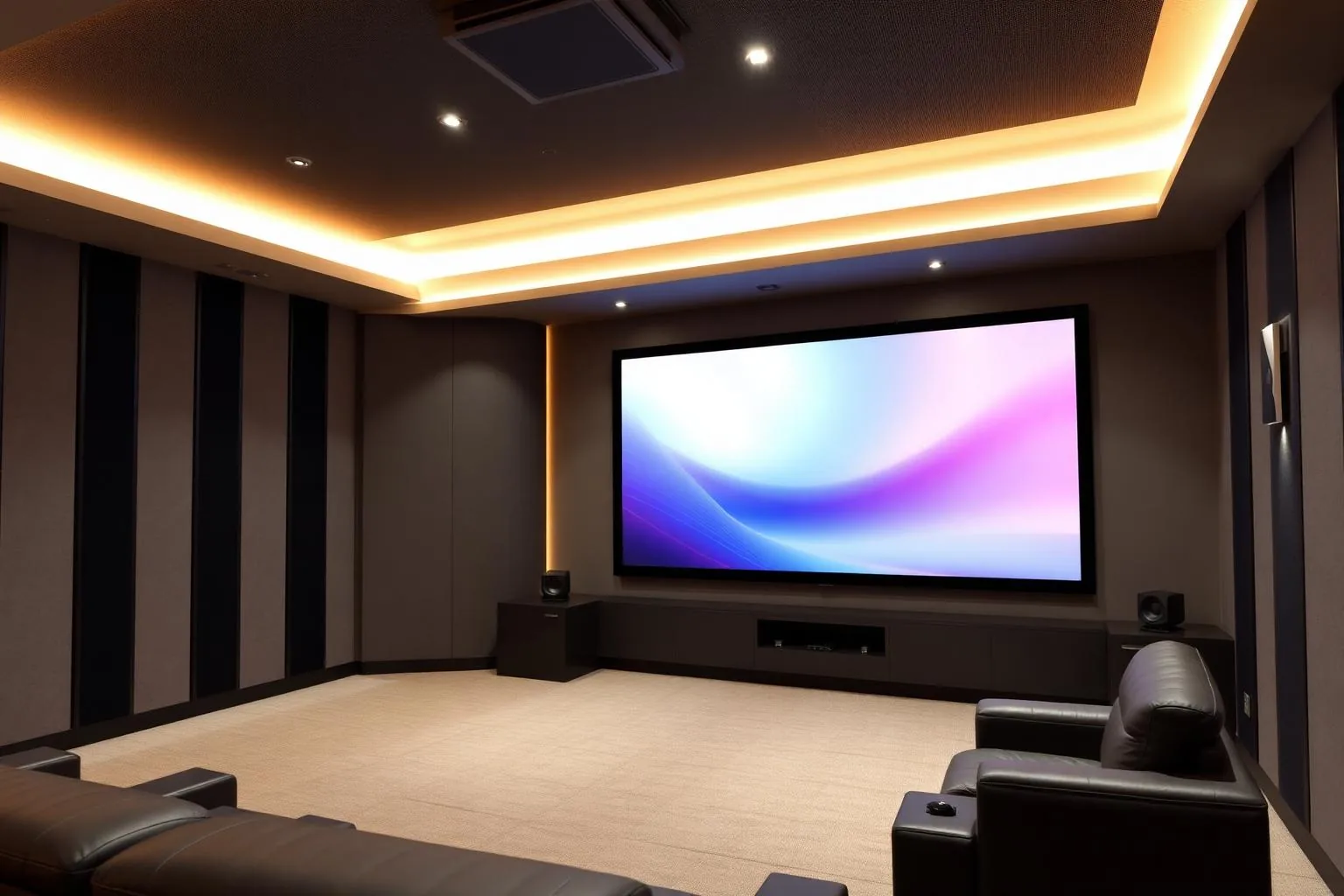
On sloped Sharon Woods lots, walk-out lower levels make genuinely good cinema rooms — inherently dark, acoustically isolated from living space, and with the ceiling depth projection needs.
A real room means acoustic treatment, correct seating geometry, calibrated projection or a large direct-view display, light control, and HVAC that is quiet. A television on a basement wall is a different product; there is nothing wrong with it, but it should be a decision rather than a disappointment.
Security, cameras, and access
Camera coverage at approaches, keyless entry, monitored alarm, water-leak sensors at every wet location and the water heater, and freeze protection. In an older house the leak sensors pay for the whole system the first time a supply line fails.
Integration and living with it
The measure of a good system is that guests can operate it. One interface, consistent naming, physical keypads at the doors people actually use, and a support relationship with someone local who will answer when something stops working in year four.
Featured Integrator
Technology that disappears is technology that was planned
Rack locations, cable pathways, speaker placement, and access-point coverage are framing-stage decisions. Everything retrofitted afterward is visible, and it stays visible.
That work here is Peters Audio Video — Smart Home, Audio & Video. Visit Peters Audio Video
Affiliated or paid relationship; compensation never buys editorial placement. Full disclosure.
Questions & Answers
Frequently asked questions
Direct answers to what readers most often ask about this section of the guide. Each answer cites the primary source it rests on.
All Sharon Woods questions →Why is wireless coverage poor in older Charlotte homes?
+
Masonry exterior walls, plaster, and foil-faced insulation all attenuate wireless signal. Reliable coverage in houses of this construction generally requires hardwired cabling to ceiling-mounted access points rather than a single consumer router.
Source: ENERGY STAR residential guidance
When should smart home wiring be installed?
+
During framing, before drywall. Structured cabling, speaker locations, rack placement, and access-point positions are all framing-stage decisions, and retrofitting them afterward is substantially more expensive and more visible.