Origins
The History of Sharon Woods
How a post-war south Charlotte subdivision became one of the most desirable inside-the-loop addresses in the city.
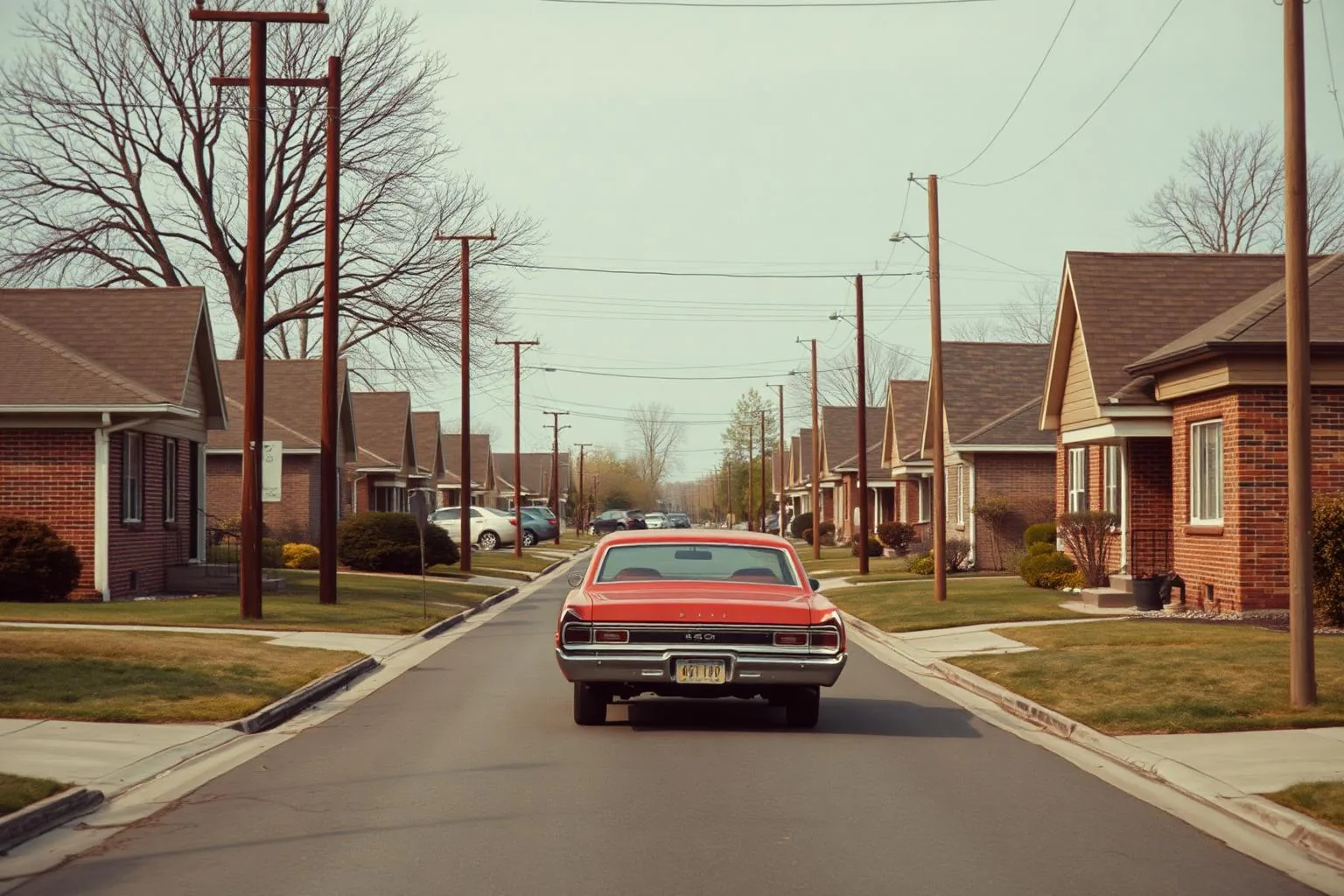
Sharon Woods is a product of Charlotte's southward push. In the decades after the Second World War, the city expanded down Sharon Road and Park Road into farmland and woodlot, and developers cut subdivisions out of the hardwoods — leaving, crucially, many of the trees standing.
That decision, made for cost and speed as much as for beauty, is the reason the neighborhood looks the way it does today.
The post-war subdivision
The lots were laid out to the standards of their moment: wide frontage, deep setbacks, curving streets that broke from the grid of Charlotte's older streetcar neighborhoods. Houses went up in brick — Charlotte's default material — as ranches and split-levels, aimed at families moving out of Dilworth, Myers Park's edges, and the city's older housing.
What the developers could not have anticipated was that the farmland further south would keep filling in for another sixty years, and that a neighborhood built as the suburban frontier would end up sitting well inside the metropolitan core.
SouthPark changes everything
When SouthPark Mall opened at the intersection of Sharon and Fairview in 1970, the surrounding neighborhoods gained a commercial anchor that would grow into Charlotte's second business district. Office towers, restaurants, and eventually luxury retail collected around it.
For Sharon Woods, the effect was structural. A neighborhood of modest post-war houses now sat a five-minute drive from one of the strongest retail and employment nodes in the Carolinas. Land value began a long climb that has not reversed.
A timeline of the neighborhood
The broad strokes of Sharon Woods' development read like a compressed history of south Charlotte itself. Each decade left a layer that is still visible from the street.
- Late 1940s–1950s: farmland and woodlot along Sharon Road begins converting to residential plats as Charlotte pushes south
- 1950s–1960s: primary build-out — brick ranches and split-levels on wide, curving streets with mature hardwoods retained
- 1970: SouthPark Mall opens at Sharon and Fairview, anchoring what becomes Charlotte's second business district
- 1980s: the original housing stock turns over to a second generation of owners; first wave of kitchen and bath updates
- 1990s: additive renovations — bonus rooms, sunrooms, garage conversions — as systems reach end of life
- 2000s: whole-house renovations open mid-century floor plans into great-room layouts
- 2010s: lot value overtakes improvement value on the best streets; selective teardowns and the first new custom homes appear
- 2020s: the rebuild era matures — new construction sits alongside surviving original ranches, and execution quality becomes the neighborhood's defining question
Why the trees survived
The single most consequential decision in the neighborhood's history was also the least sentimental one. Clearing a wooded parcel costs money; grading around mature hardwoods and cutting streets through the gaps was faster and cheaper than stripping the land bare. Developers working the Sharon Road corridor in the 1950s left standing what other subdivisions bulldozed.
Seventy years later, that cost-saving measure is the neighborhood's identity. The willow oaks, tulip poplars, and white oaks that were middle-aged when the first ranches went up are now at full maturity, and the canopy they form is the amenity no later development could afford to replicate. Every valuation conversation in Sharon Woods eventually returns to the trees.
The renovation decades
By the 1990s the original houses were thirty years old and their systems were failing. The first response was additive: bonus rooms over garages, sunrooms, kitchen bump-outs. The 2000s went further, with whole-house renovations that opened the compartmented mid-century plans into the great-room layouts buyers were asking for.
The 2010s brought the arithmetic that reshapes any neighborhood of this age — the point at which a well-located lot is worth more than the house standing on it. Selective teardowns began, and with them the current era: new construction on old streets, done well when the builder respects scale and massing, and conspicuously badly when they don't.
How the housing stock reads today
Walk any street and you can date a house within a decade from the sidewalk. Original ranches sit low and horizontal under the canopy. 1990s additions announce themselves with rooflines that don't quite match. 2000s renovations hide behind original brick. The newest construction stands taller, on lots where the previous house was taken down to the foundation.
That layering is the neighborhood's record of itself — six decades of decisions, legible to anyone who knows what to look for. The streets and architecture sections of this guide read that record block by block and style by style.
Where the neighborhood stands now
Sharon Woods today is a neighborhood in its third act. The canopy is at maturity. The housing stock spans six decades. Land constrains everything, because none is being made and very little trades.
Its trajectory now depends less on the market than on how the next hundred renovations and rebuilds are executed — whether they sit down into the streetscape or stand out of it. That is why the architecture section of this guide exists.
Building in Context
The best new houses here look like they were always here
Sixty years of canopy and one-story ranch massing set a scale. New construction that ignores it never quite settles in — and never resells like the houses that do.
That work here is Peters Custom Homes — Custom Homes & Renovations. Visit Peters Custom Homes
Affiliated or paid relationship; compensation never buys editorial placement. Full disclosure.
Questions & Answers
Frequently asked questions
Direct answers to what readers most often ask about this section of the guide. Each answer cites the primary source it rests on.
All Sharon Woods questions →When did SouthPark Mall open, and how did it affect Sharon Woods?
+
SouthPark Mall opened in 1970 at Sharon and Fairview, anchoring what became Charlotte's second business district. Its growth transformed nearby post-war neighborhoods including Sharon Woods from suburban frontier into central, high-demand addresses.