Street-Level Fundamentals
Tree Canopy and Setbacks in Sharon Woods
The single feature buyers cite most often when they explain why they chose a Sharon Woods street — and the rules that govern what you can do near it.
| Canopy age | Generally 60-plus years on original streets |
|---|---|
| Governing bodies | City of Charlotte, Mecklenburg County |
| Setback rules | Vary by parcel and zoning district |
| Verify with | Charlotte Planning, Design & Development |
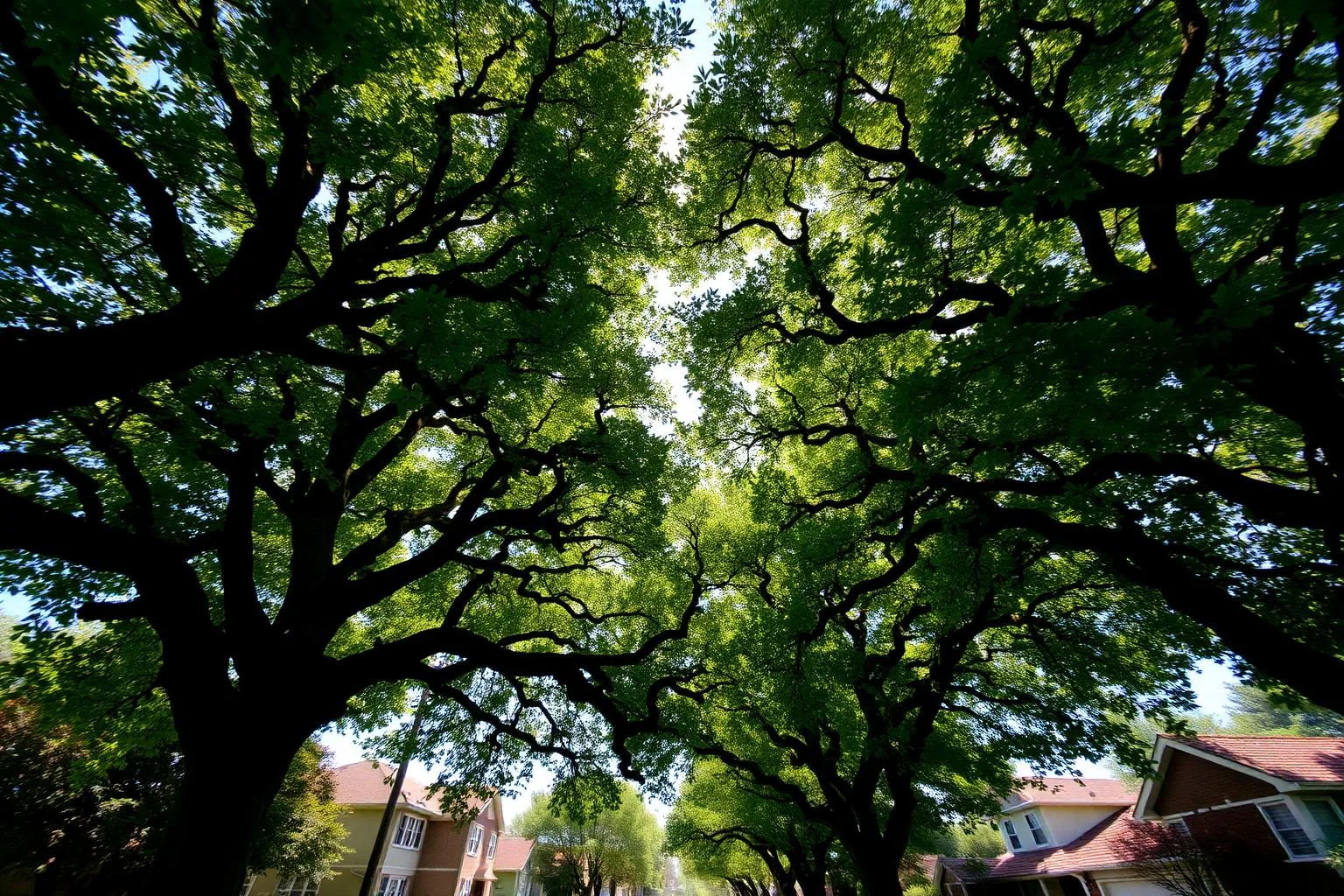
Ask a longtime Sharon Woods owner what sold them on the street, and the tree canopy comes up before the house does more often than not. The original developers left much of the hardwood cover in place when they platted the subdivision in the 1950s and 1960s, and six-plus decades of growth since then produced the closed, tunnel-like canopy that now defines the neighborhood's best streets.
That canopy is not incidental scenery — it interacts directly with setback rules, renovation and rebuild planning, and even street-by-street pricing. This page covers how.
Why the canopy varies street to street
Canopy continuity depends on two things: how much original hardwood cover a given street retained through decades of storms and development pressure, and how consistently individual owners have replanted rather than removed as trees have aged out. Some interior streets read as an unbroken green tunnel through summer; others have visible gaps where large trees came down and were not replaced, changing both the look and the microclimate of the block.
Newer rebuilds are a particular pressure point. A teardown-and-rebuild project that clears a lot for construction access, even temporarily, can damage root systems on mature trees in ways that only show up as decline years later — a risk worth asking about on any recently redeveloped lot.
- Canopy continuity varies block by block, not uniformly neighborhood-wide
- Storm damage and age both thin canopy over time without replanting
- Construction activity near mature trees can cause delayed root damage
- Best-preserved canopy tends to concentrate on the oldest interior streets
How setbacks and tree rules interact
Charlotte's zoning ordinance sets setback distances, lot coverage limits, and height restrictions that constrain how close to a lot line — and how large — any addition, garage, or new house can be, and Mecklenburg County's tree-related and stormwater regulations can add further constraints depending on the parcel. These rules are not uniform across the neighborhood; they depend on zoning district and the specific lot, and they are updated periodically.
For a buyer weighing an addition or rebuild, this means canopy is not just an aesthetic asset to protect but a planning variable — a mature tree near a proposed build footprint can determine whether a design needs to shift, and by how much, before it can be permitted.
What to do before planning any work near mature trees
Confirm the zoning district, exact setback requirements, and any tree-related ordinance provisions for the specific parcel with Charlotte Planning, Design & Development before finalizing any design. Consult a certified arborist before removing or building near a mature tree that a household wants to keep — root protection zones are frequently larger than owners expect.
For work planned near a property line, verify the recorded boundary and any easements on the Mecklenburg County POLARIS viewer, since canopy and construction disputes between neighbors often trace back to an assumed rather than surveyed line.
More in this section: Streets. Back to the full Sharon Woods guide.
Also in Streets
- Sharon Road Frontage
The namesake edge road — traffic, deep lots, and where the value actually is.
- Park Road Frontage
The everyday-errand edge — closest to shopping, with the traffic to match.
- Fairview Road Frontage
The busiest boundary — where screening and setback do the most work.
- Interior Residential Streets
Curving blocks, closed canopy, and the neighborhood's strongest prices.
- Cul-de-Sacs & Dead Ends
Zero through traffic, pie-shaped lots, and homes that rarely come to market.
- Perimeter & Connector Streets
The internal roads that funnel traffic to the edges — a distinct value tier.
- Lot Sizes & Orientation
Why shape, depth, and orientation matter more than the raw lot number.
Build & Renovate
Plan around the canopy, not against it
The best new construction and additions in Sharon Woods are sited to protect the trees that make the street worth building on in the first place.
That work here is Peters Custom Homes — Custom Homes & Renovations. Visit Peters Custom Homes
Affiliated or paid relationship; compensation never buys editorial placement. Full disclosure.
Questions & Answers
Frequently asked questions
Direct answers to what readers most often ask about this section of the guide. Each answer cites the primary source it rests on.
All Sharon Woods questions →Can I remove a mature tree on my Sharon Woods property?
+
That depends on the tree, the parcel's zoning district, and any applicable City of Charlotte or Mecklenburg County tree ordinance provisions. Confirm requirements with Charlotte Planning, Design & Development before removing any mature tree, particularly one near a property line.
Source: City of Charlotte Unified Development Ordinance (2023)
How do setback rules affect additions near trees in Sharon Woods?
+
Setback distances are set by Charlotte's zoning ordinance and vary by parcel and district, and they apply regardless of tree placement — but a mature tree inside the buildable envelope can still force a design change. Verify both the zoning setback and tree considerations with the City of Charlotte before finalizing plans.
Source: City of Charlotte Unified Development Ordinance (2023)
Why does canopy coverage vary so much between Sharon Woods streets?
+
It comes down to how much original hardwood cover a street retained and how consistently owners have replanted as older trees have declined or come down in storms. The oldest, most consistently maintained interior streets tend to show the fullest, most continuous canopy today.