Fundamentals
Lots, Land Value, and Why Sharon Woods Prices the Way It Does
In a neighborhood with no remaining land, the dirt does more of the pricing work than the house does.
| Typical lot | Roughly one-third to over one-half acre |
|---|---|
| Supply | Fixed; no undeveloped land remains |
| Value drivers | Depth, grade, canopy, and street position |
| Source of truth | Mecklenburg County POLARIS parcel viewer |
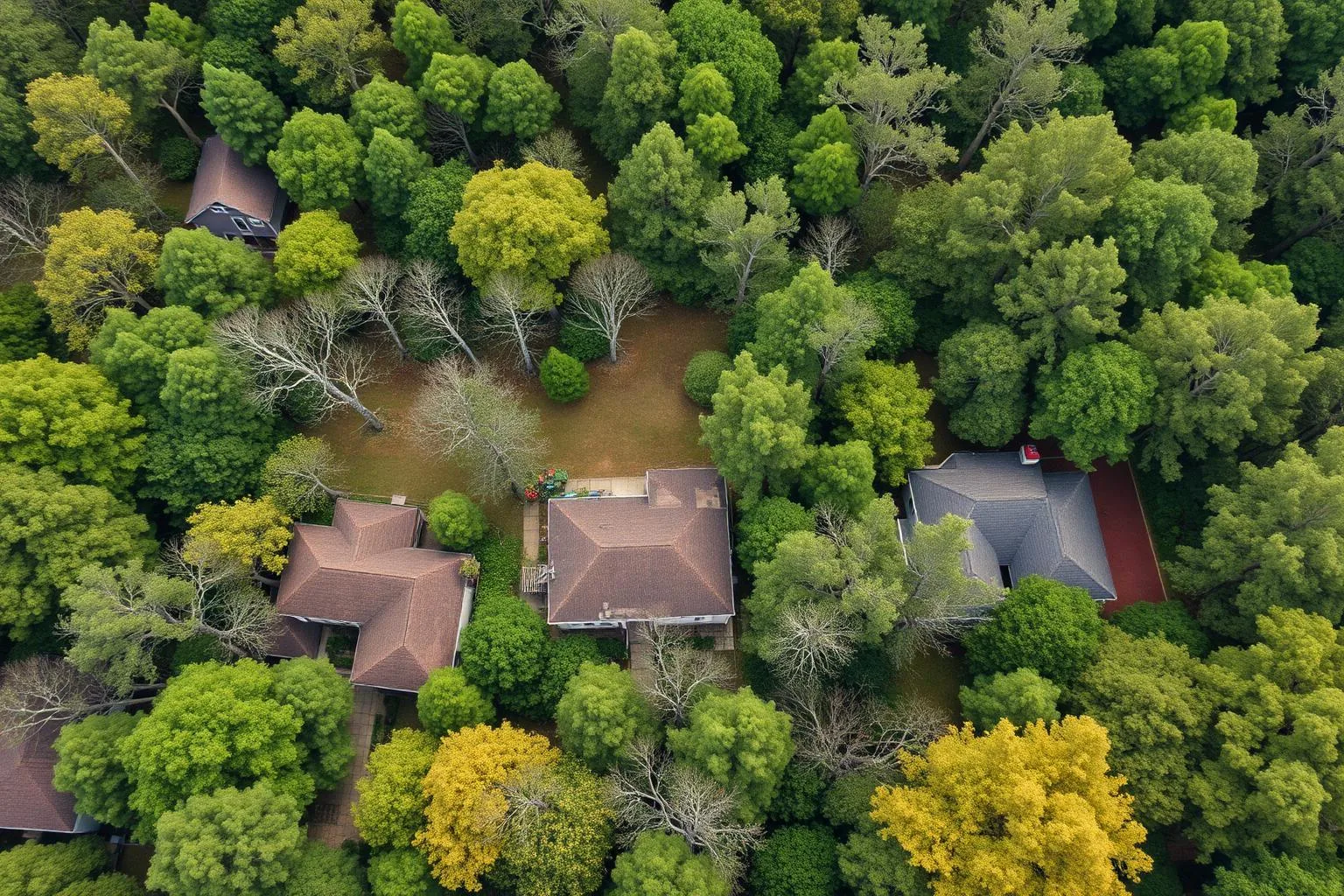
In a new subdivision, the house is most of the price. In a built-out inside-the-ring neighborhood, the land is — and in Sharon Woods the land is genuinely scarce, because there is no more of it and none is coming.
Learning to read a lot is therefore the highest-leverage skill for a buyer here, ahead of reading a floor plan.
What makes one lot worth more
Depth matters more than width, because depth creates the rear yard and the room for an addition. Grade matters because a falling lot produces walk-out space but complicates drainage and driveways. Canopy matters because sixty-year-old hardwoods cannot be installed, and because the tree ordinance treats them as a constraint on building.
Street position ties it together: an interior lot on a curve with a deep rear yard and healthy trees is the top of the market; a shallow perimeter lot on a connector with a cleared rear is the bottom of it.
- Depth over width for addition potential
- Grade: walk-out potential versus drainage cost
- Mature canopy as both amenity and constraint
- Interior versus perimeter street position
- Easements and utility corridors that limit siting
How to check a lot before you commit
Pull the parcel in Mecklenburg County's POLARIS viewer. It shows dimensions, recorded acreage, easements, floodplain overlays, and adjoining ownership. Then walk the lot after rain — that is when drainage tells the truth.
For anything involving construction, order a survey. Recorded plats from the 1950s are frequently imprecise about exactly where a line sits.
Why the pricing holds
Fixed supply, a central location, and a housing stock that can be improved rather than replaced create a floor most Charlotte neighborhoods do not have. That is a structural argument, not a forecast, and no one can promise future values.
Setbacks, lot coverage, height limits, and tree ordinance requirements are set by the City of Charlotte and Mecklenburg County and vary by parcel and zoning district. Confirm every constraint with Charlotte Planning, Design & Development and the Mecklenburg County POLARIS viewer before scoping work.
More in this section: Real Estate. Back to the full Sharon Woods guide.
Also in Real Estate
- The Brick Ranch
The founding house type — construction, plan logic, and how it renovates.
- The Split-Level
The plan the topography produced — often the best value on the street.
- Two-Story Colonials
The minority type that usually arrives already sized for a modern family.
- Renovated & Expanded
How to tell a considered renovation from a fast cosmetic flip.
- New Construction
Teardown rebuilds on existing lots — feasibility, scale limits, and risk.
- Mid-Century Modern
The rare genuinely modern houses, and how they trade differently.
- What Your Budget Buys
How the condition ladder works, band by band, without invented numbers.
Questions & Answers
Frequently asked questions
Direct answers to what readers most often ask about this section of the guide. Each answer cites the primary source it rests on.
All Sharon Woods questions →How big are Sharon Woods lots?
+
Lots commonly run from roughly a third of an acre to over half an acre, with deep front setbacks and mature hardwood canopy. Exact dimensions, easements, and overlays for any specific parcel are published in Mecklenburg County's POLARIS viewer.
Source: City of Charlotte Unified Development Ordinance (2023)
Is there any vacant land left in Sharon Woods?
+
No meaningful undeveloped land remains in the neighborhood. New houses are built by rebuilding on existing lots, which is why land value carries so much of the pricing.
Source: City of Charlotte Unified Development Ordinance (2023)
Does the tree ordinance affect what I can build?
+
Yes. Charlotte's tree requirements protect specified trees and can reshape a buildable footprint on a wooded lot. Confirm the requirements for a specific parcel with Charlotte Planning, Design & Development before designing.
Source: City of Charlotte Unified Development Ordinance (2023)