Regulatory
The Tree Ordinance and Sharon Woods Lots
The mature canopy that defines this neighborhood is also a regulated asset. Understand the ordinance before it shapes your site plan for you.
| Governing rule | City of Charlotte tree ordinance |
|---|---|
| Key concept | Protected specimen trees |
| When it matters | Before siting any new structure |
| Verification step | Tree survey for the specific parcel |
The mature hardwood canopy is one of the defining features of Sharon Woods, and it is not incidental — the City of Charlotte's tree ordinance protects certain trees and regulates removal, replacement, and mitigation in ways that can materially affect where a house, addition, or driveway can go. Learning what applies to a specific lot before design begins is one of the cheapest and highest-value steps in the entire process.
It is also an area where general guidance is genuinely insufficient, because the ordinance's application depends on tree species, size, condition, and location relative to the proposed work — details that only a current tree survey and a direct check with the City of Charlotte can establish.
Why this matters on a Sharon Woods lot
Sharon Woods was built decades ago among hardwoods that have had sixty years to mature, and it is common for a lot's most sensible building pad to sit near a large specimen tree. Discovering a protection requirement after a design is finalized — or after a purchase closes — can force a costly redesign, and in the worst cases can eliminate the building envelope a buyer assumed they had.
This is precisely why a tree survey and an ordinance check belong in the due-diligence phase of any purchase intended for new construction or a major addition, not after the closing.
What a tree survey typically covers
A tree survey documents the species, size, condition, and location of trees on a parcel relative to the property lines and any proposed construction. This is the document that identifies which trees may be classified as protected and therefore constrain siting, removal, or root-zone disturbance during construction.
Protected specimen trees, removal permits, and replanting or mitigation requirements are governed by the City of Charlotte tree ordinance and change periodically. Verify the current rules and any tree survey obligations for a specific lot directly with the City of Charlotte before finalizing a site plan.
- Species and trunk diameter of significant trees on the parcel
- Location relative to the proposed building envelope
- Root-zone extent that may require protection during construction
- Any documented condition issues affecting a tree's long-term viability
Protection during construction
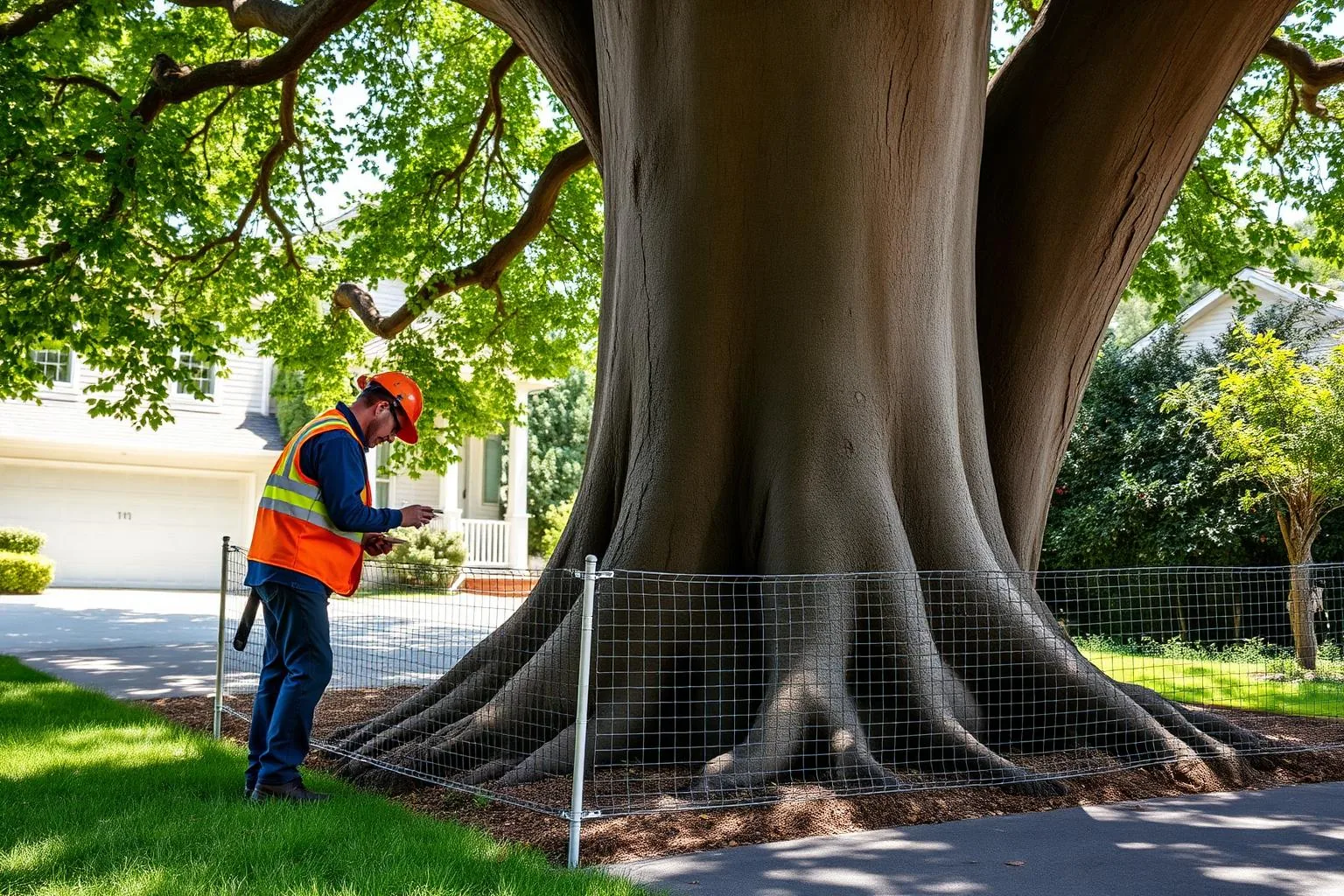
Where trees are being retained near active construction, protective fencing around the root zone is typically required before equipment mobilizes, and enforcement can include stop-work consequences if protection is inadequate or damage occurs. Contractors experienced with Charlotte infill work generally build this into the site logistics plan from day one rather than treating it as an afterthought.
Removal, mitigation, and replanting
Where removal of a protected tree is necessary or permitted, mitigation or replanting requirements may apply, and the specifics — which trees qualify, what mitigation looks like, and what documentation is required — are set and administered by the City of Charlotte. Any homeowner or builder should confirm the current requirements directly rather than relying on a neighboring project's experience, since rules and specific circumstances vary.
More in this section: Build & Renovate. Back to the full Sharon Woods guide.
Also in Build & Renovate
- Teardown & Rebuild
Feasibility, demolition scope, and how a teardown actually proceeds.
- Additions
Rear, side, and second-story strategy for growing a mid-century house.
- Kitchen Renovation
Layout strategy and sequencing for opening a closed mid-century kitchen.
- Primary Suite Additions
Rear-addition, side, and reconfiguration strategies compared.
- Permits & Zoning
What governs a project here, and who to verify the details with.
- Choosing a Builder
The checkable credentials, references, and contract terms that matter.
- Renovation Budgets
How to categorize spending and hold contingency without guessing prices.
Featured Builder
Tree protection is a scheduling issue as much as a design one
Builders who plan root-zone protection into their site logistics from the start avoid the delays and disputes that come from treating it as an afterthought.
That work here is Peters Custom Homes — Custom Homes & Renovations. Visit Peters Custom Homes
Affiliated or paid relationship; compensation never buys editorial placement. Full disclosure.
Questions & Answers
Frequently asked questions
Direct answers to what readers most often ask about this section of the guide. Each answer cites the primary source it rests on.
All Sharon Woods questions →How do I know if a tree on my Sharon Woods lot is protected?
+
A tree survey documenting species, size, and location is the starting point, and the City of Charlotte is the authority to confirm whether a given tree meets the criteria for protection under the current ordinance. Do not assume a tree's status based on its appearance or age alone.
Source: City of Charlotte Unified Development Ordinance (2023)
Can I remove a large tree to make room for an addition?
+
It depends on whether the tree is classified as protected under the current City of Charlotte tree ordinance, and if so, what mitigation or replanting requirements apply to removal. Confirm the specific requirements with the City of Charlotte before finalizing a site plan that depends on removal.
Source: City of Charlotte Unified Development Ordinance (2023)
What happens if a protected tree is damaged during construction?
+
Damage to a protected tree during construction can carry enforcement consequences under the City of Charlotte's ordinance, which is why protective fencing around root zones is typically required before work begins. Confirm current protection and remediation requirements with the City of Charlotte and build them into the construction contract.
Source: City of Charlotte Unified Development Ordinance (2023)