Charlotte Service Guide
Home Remodeling in Charlotte, NC
Scoping, sequencing, permitting, and budgeting a remodel in Charlotte's established neighborhoods, where most houses were built before 1985.
| Charlotte's core housing stock | Largely 1940s–1980s inside I-485 |
|---|---|
| Permit authority | Mecklenburg County Code Enforcement |
| Typical kitchen remodel | 8–14 weeks of active construction |
| Typical whole-floor remodel | 4–8 months |
| Contingency to carry | 10–20% on any pre-1980 house |
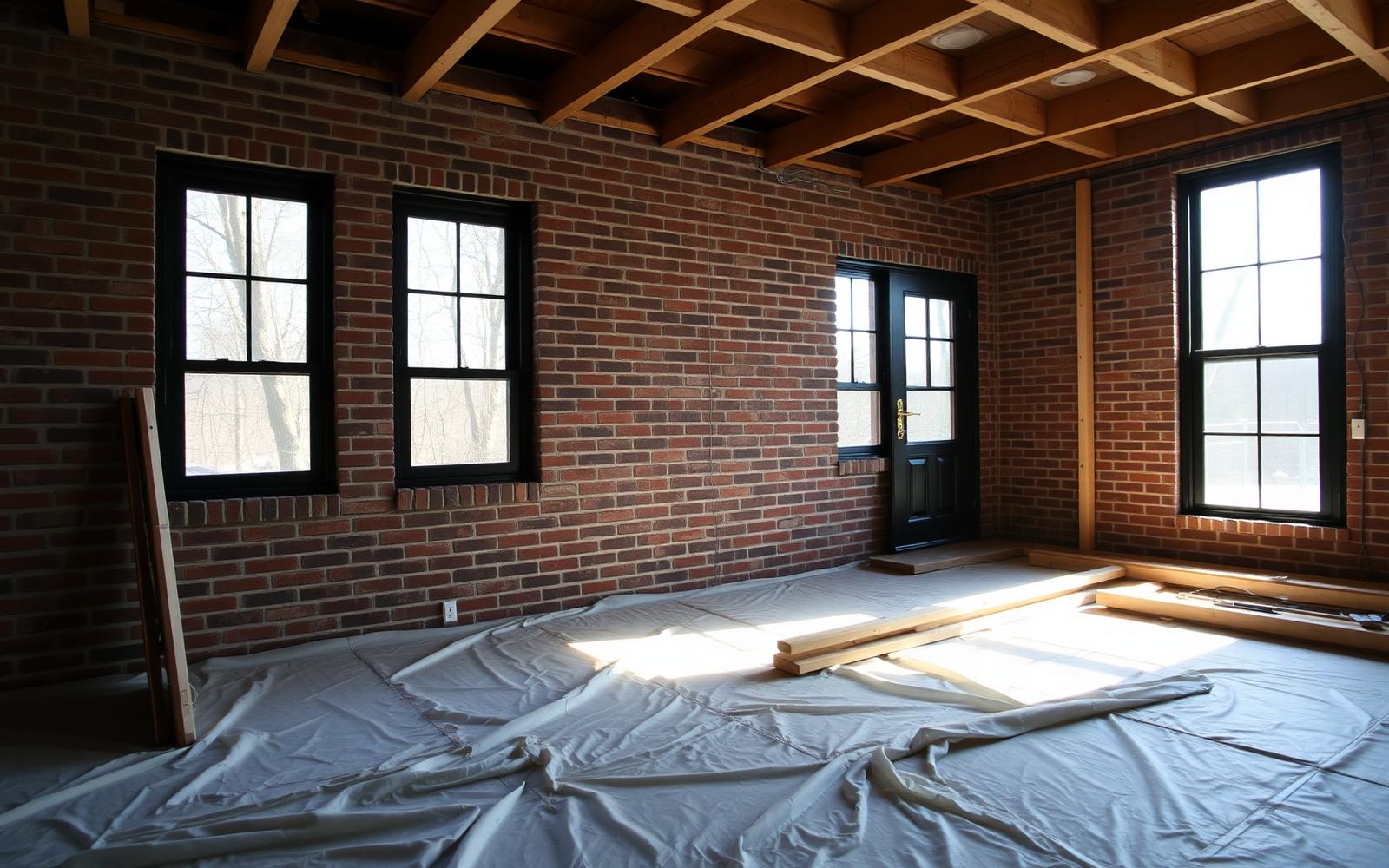
Charlotte's inner neighborhoods are full of solid, unremarkable houses on excellent lots — brick ranches, split-levels, and 1970s traditionals with small kitchens, closed floor plans, and original systems. Remodeling is the dominant form of construction in that belt, and it is a different discipline from new building.
The defining feature of a remodel is uncertainty. Nobody knows what is behind a wall until it opens. Every experienced Charlotte remodeler prices, schedules, and communicates around that fact, and every homeowner should budget for it.
What older Charlotte houses commonly need
The list is consistent across the pre-1985 stock: undersized electrical service, cast-iron or galvanized drain lines nearing end of life, minimal insulation, single-pane or failed replacement windows, and HVAC systems sized for a floor plan that is about to change.
None of these are visible in listing photos, and all of them surface once a wall opens. A remodel budget that only covers what you can see is a budget that will be revised.
- Panel upgrades and rewiring in kitchens and baths
- Drain, waste, and vent replacement under slab or in crawlspace
- Insulation and air sealing, especially in vented attics
- Window replacement, often the single largest line after cabinetry
- HVAC re-sizing and duct redesign after a plan change
Sequencing the work
Order matters more than anything else in remodeling economics. Roofing, structural, and mechanical work come before finishes, always. Kitchens and baths come before flooring where the flooring runs continuous. Painting comes after millwork, and the driveway comes last because heavy equipment will be on it until the end.
Homeowners who phase a remodel over years should still plan the whole scope up front, so phase one does not have to be undone by phase three.
Permits and what triggers them
Structural changes, electrical work, plumbing relocations, mechanical replacement, decks, and additions all require permits in Mecklenburg County. Cosmetic work — paint, flooring, cabinet replacement in the same footprint — generally does not.
Unpermitted work is a problem you inherit and then sell. It surfaces during appraisal, inspection, and insurance claims, and correcting it retroactively costs more than doing it right. Insist that permits are pulled in the contractor's name and posted on site.
Permitting for this work runs through Mecklenburg County Code Enforcement, with zoning reviewed against the Charlotte Unified Development Ordinance. Verify setbacks, lot coverage, and any overlay or historic-district rules for the specific parcel before design work begins.
Living through it
A kitchen remodel means eight to fourteen weeks without a kitchen. A whole-floor renovation means dust in rooms you thought were sealed. Decide before the start whether you are staying or moving out, because the answer changes the schedule, the cost of temporary protection, and the crew's daily productivity.
Ask for a written schedule with milestone dates, a single point of contact, and a defined weekly update. The projects that go badly are almost never the ones with too much communication.
More in this section: Charlotte Home Services. Back to the full Sharon Woods guide.
Also in Charlotte Home Services
- Custom Home Builders
Lot selection, budgets, contracts, permitting, and how to judge a Charlotte builder.
- Interior Designers
Scope, fee structures, trade pricing, and when to bring a designer into a project.
- Kitchen Remodeling
Layout, cabinetry grades, stone, appliances, and the lead times that set the schedule.
- Bathroom Remodeling
Waterproofing, layout, tile, and ventilation — the details that decide longevity.
- Luxury Home Builders
What separates a luxury builder from an expensive one, and how to verify it.
- Whole-House Renovations
Down-to-the-studs renovation scope, systems, timelines, and the rebuild threshold.
- Home Additions
Setbacks, lot coverage, foundations, roof tie-ins, and making an addition look original.
- Home Theater Installation
Room selection, acoustics, projection, seating, and what must happen before drywall.
- Smart Home Automation
Networking, lighting control, shades, audio, and why integration beats app sprawl.
- Luxury Real Estate
Where Charlotte's upper bracket concentrates and how those properties actually trade.
- Outdoor Living
Porches, terraces, kitchens, and pools built for Charlotte's climate and rainfall.
- The Design Process
Every phase from first conversation to the one-year warranty walk, with real durations.
- New Construction Homes
Production, spec, and custom infill — three different products sold under one phrase.
- Teardown & Rebuild
Lot value, demolition, zoning limits, and the math behind replacing a house.
- Renovation Costs
How renovation budgets are structured, what drives them, and how to read an estimate.
Featured Contractor
Remodeling is a coordination problem before it is a construction problem
Architect, builder, designer, and low-voltage integrator working from one plan produces a house that feels inevitable. Four trades hired sequentially produces a house that feels assembled.
That work here is Peters Custom Homes — Custom Homes & Renovations. Visit Peters Custom Homes
Affiliated or paid relationship; compensation never buys editorial placement. Full disclosure.
Questions & Answers
Frequently asked questions
Direct answers to what readers most often ask about this section of the guide. Each answer cites the primary source it rests on.
All Sharon Woods questions →How much should I budget for a Charlotte home remodel?
+
Budgets vary too widely by scope for a single figure to be useful, but two rules hold: get a line-item estimate rather than a lump sum, and carry a 10 to 20 percent contingency on any house built before 1980, because concealed conditions in older Charlotte stock are the norm rather than the exception.
Do I need a permit to remodel in Charlotte?
+
Yes for structural, electrical, plumbing, mechanical, deck, and addition work, all permitted through Mecklenburg County Code Enforcement. Purely cosmetic work within the existing footprint generally does not require one. Permits should be pulled in the contractor's name and posted on site.
Source: City of Charlotte / Mecklenburg County Code Enforcement permitting
How long does a major remodel take?
+
A kitchen typically runs 8 to 14 weeks of active construction, a primary suite 6 to 12 weeks, and a whole-floor or whole-house renovation 4 to 8 months, plus a design and permitting period beforehand that is easy to underestimate.
Source: City of Charlotte / Mecklenburg County Code Enforcement permitting
Should I remodel or move?
+
If you like the lot, the street, and the school assignment, remodeling usually wins in Charlotte's established neighborhoods, where land is the scarce asset. If the house has fundamental problems — low ceilings, a compromised foundation, a plan that cannot be opened — the money is better spent elsewhere.