Charlotte Service Guide
Smart Home Automation in Charlotte, NC
Networking, lighting control, shades, audio, and security — how a professionally integrated system differs from a house full of apps.
| Foundation | Wired network and structured cabling |
|---|---|
| Highest-impact subsystem | Lighting control |
| Plan by | Pre-wire stage of construction |
| Retrofit path | Wireless lighting and mesh networking |
| Design rule | One interface, not one app per device |
The difference between a smart home and a house with smart devices is integration. A dozen products from a dozen brands, each with its own app and its own cloud dependency, is a maintenance burden. A designed system puts lighting, shades, audio, climate, cameras, and access behind one interface with predictable behavior.
Everything else in that system depends on the network. Charlotte's larger homes, brick construction, and generous lots all work against wireless coverage, which is why the wired backbone is where a professional installation starts.
Start with the network
Structured cabling to every access point, television, camera, and rack location, terminated in a ventilated equipment closet with a UPS. Wireless access points ceiling-mounted and placed by coverage plan rather than convenience. A router and switch sized for the household rather than supplied by the internet provider.
Brick exteriors, plaster walls, and long floor plans defeat consumer mesh systems in exactly the houses that most need coverage. Wired access points solve it permanently.
- Category cable home runs to every AP, TV, camera, and rack
- Ceiling-mounted access points on a coverage plan
- Managed switch with PoE for cameras and access points
- Rack in a ventilated location with battery backup
- Separate network segments for guests and IoT devices
Lighting control earns its keep
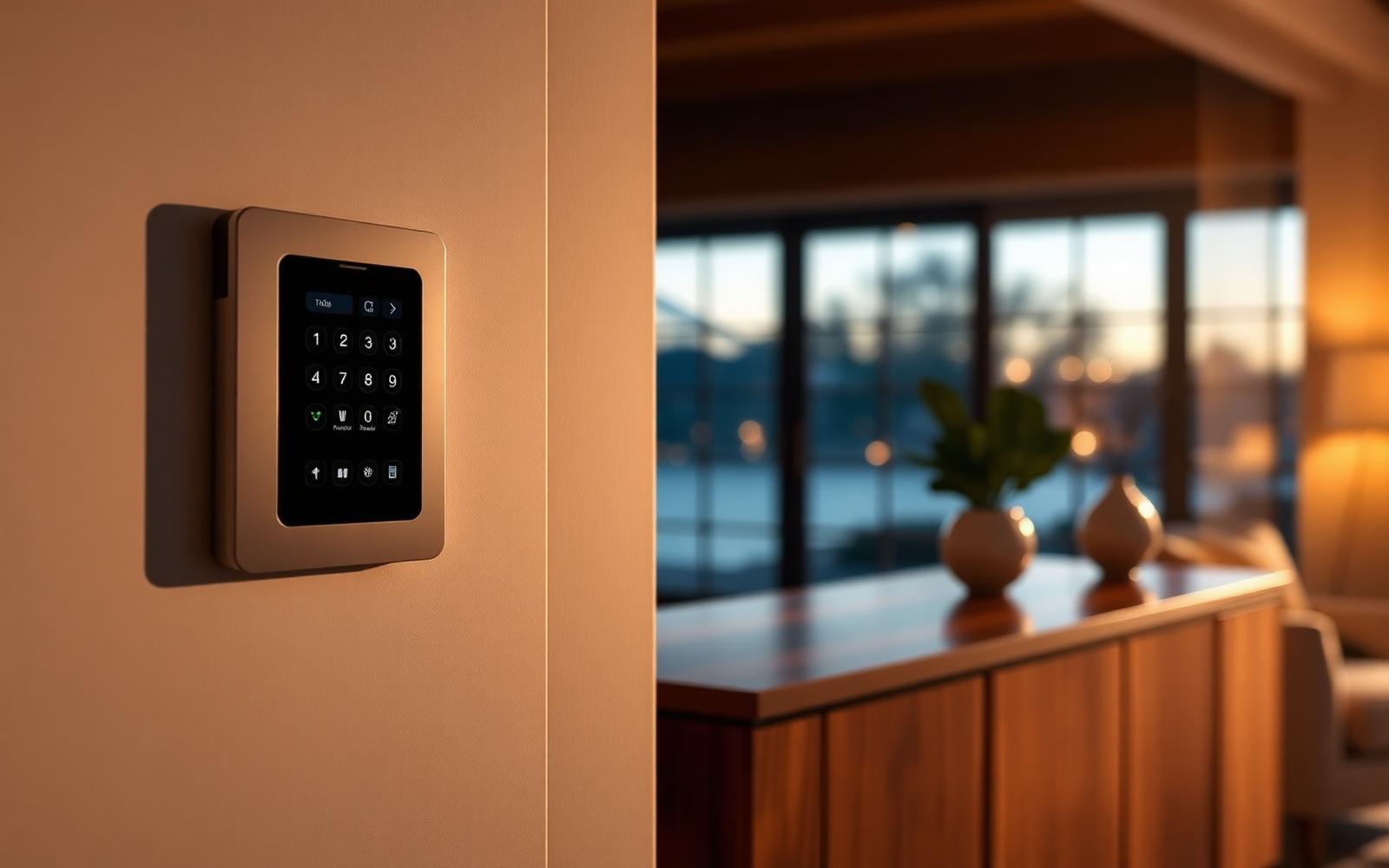
Of every subsystem, lighting control is the one homeowners notice daily. Keypads replace banks of switches with named scenes, dimming extends lamp life and makes a room look the way the designer intended, and astronomic time clocks handle exterior lighting without anyone thinking about it.
It also has to be planned with the electrician and the interior designer together, because scene design depends on which fixtures are on which load, and that is decided at rough-in.
Shades, audio, climate, and security
Motorized shades manage glare, heat gain, and privacy, and in Charlotte's summer they measurably affect comfort on west-facing glass. They need power at the head of each window opening, which means planning before drywall.
Distributed audio should be zoned to how the house is used rather than room by room. Climate integration is mostly about scheduling and remote visibility. Cameras and access control belong on their own network segment with local recording, so the system keeps working when the internet does not.
Designing for the people who live there
The measure of a good system is whether a guest can turn on a light and whether the household can operate the house when the app is not open. Keypads with engraved, obvious labels beat a phone every time for daily control.
Ask any integrator how the system behaves when the internet is down and when they are not available. The honest answer to both is a better predictor of satisfaction than the brand on the touchscreen.
More in this section: Charlotte Home Services. Back to the full Sharon Woods guide.
Also in Charlotte Home Services
- Custom Home Builders
Lot selection, budgets, contracts, permitting, and how to judge a Charlotte builder.
- Interior Designers
Scope, fee structures, trade pricing, and when to bring a designer into a project.
- Home Remodeling
Scope, sequence, permits, and budgets for remodeling an older Charlotte house.
- Kitchen Remodeling
Layout, cabinetry grades, stone, appliances, and the lead times that set the schedule.
- Bathroom Remodeling
Waterproofing, layout, tile, and ventilation — the details that decide longevity.
- Luxury Home Builders
What separates a luxury builder from an expensive one, and how to verify it.
- Whole-House Renovations
Down-to-the-studs renovation scope, systems, timelines, and the rebuild threshold.
- Home Additions
Setbacks, lot coverage, foundations, roof tie-ins, and making an addition look original.
- Home Theater Installation
Room selection, acoustics, projection, seating, and what must happen before drywall.
- Luxury Real Estate
Where Charlotte's upper bracket concentrates and how those properties actually trade.
- Outdoor Living
Porches, terraces, kitchens, and pools built for Charlotte's climate and rainfall.
- The Design Process
Every phase from first conversation to the one-year warranty walk, with real durations.
- New Construction Homes
Production, spec, and custom infill — three different products sold under one phrase.
- Teardown & Rebuild
Lot value, demolition, zoning limits, and the math behind replacing a house.
- Renovation Costs
How renovation budgets are structured, what drives them, and how to read an estimate.
Technology Planning
Automation is wiring before it is apps
Lighting control, networking, shades, and audio are low-voltage decisions made before drywall closes. Plan the infrastructure during design and the house runs itself; skip it and everything is a patch.
That work here is Peters Audio Video — Smart Home, Audio & Video. Visit Peters Audio Video
Affiliated or paid relationship; compensation never buys editorial placement. Full disclosure.
Questions & Answers
Frequently asked questions
Direct answers to what readers most often ask about this section of the guide. Each answer cites the primary source it rests on.
All Sharon Woods questions →What should a smart home system include?
+
A wired network backbone with properly placed access points, lighting control, motorized shades where glare and heat matter, distributed audio, climate integration, and cameras or access control on a segmented network — all behind one interface rather than a separate app per device.
Can an existing Charlotte home be automated without rewiring?
+
Yes. Wireless lighting control, retrofit shades, and mesh or access-point networking cover most of a retrofit. Running category cable to a few key locations during any renovation dramatically improves the result.
When should automation be planned in a new build?
+
During pre-wire, before insulation. Lighting loads, keypad locations, shade power, speaker placement, camera locations, and the rack all need to be resolved while walls are open.
Source: ENERGY STAR residential guidance
Why does the network matter so much?
+
Every subsystem rides on it. Charlotte's brick construction, plaster walls, and large floor plans defeat consumer mesh gear, so wired access points and a managed switch are what keep control, streaming, and cameras reliable.