Charlotte Service Guide
Home Theater Installation in Charlotte, NC
Room selection, acoustics, projection versus display, seating sightlines, and the wiring decisions that have to happen before drywall.
| Ideal room shape | Rectangular, with the screen on a short wall |
|---|---|
| Best locations | Basement or interior bonus room |
| Decision deadline | Pre-wire, before insulation and drywall |
| Acoustic priority | First reflection points and bass control |
| Two paths | Dedicated theater or media room with a display |
A home theater is an acoustic and optical problem before it is an equipment problem. The best components in a bad room sound worse than modest components in a good one, and no amount of calibration fixes a screen wall with a window in it.
In Charlotte, where full basements are less common than in northern markets, the dedicated theater is often carved out of a bonus room over a garage or a lower level on a sloped lot. Both work — they just need to be planned as rooms, not as places where a television ends up.
Choosing the room
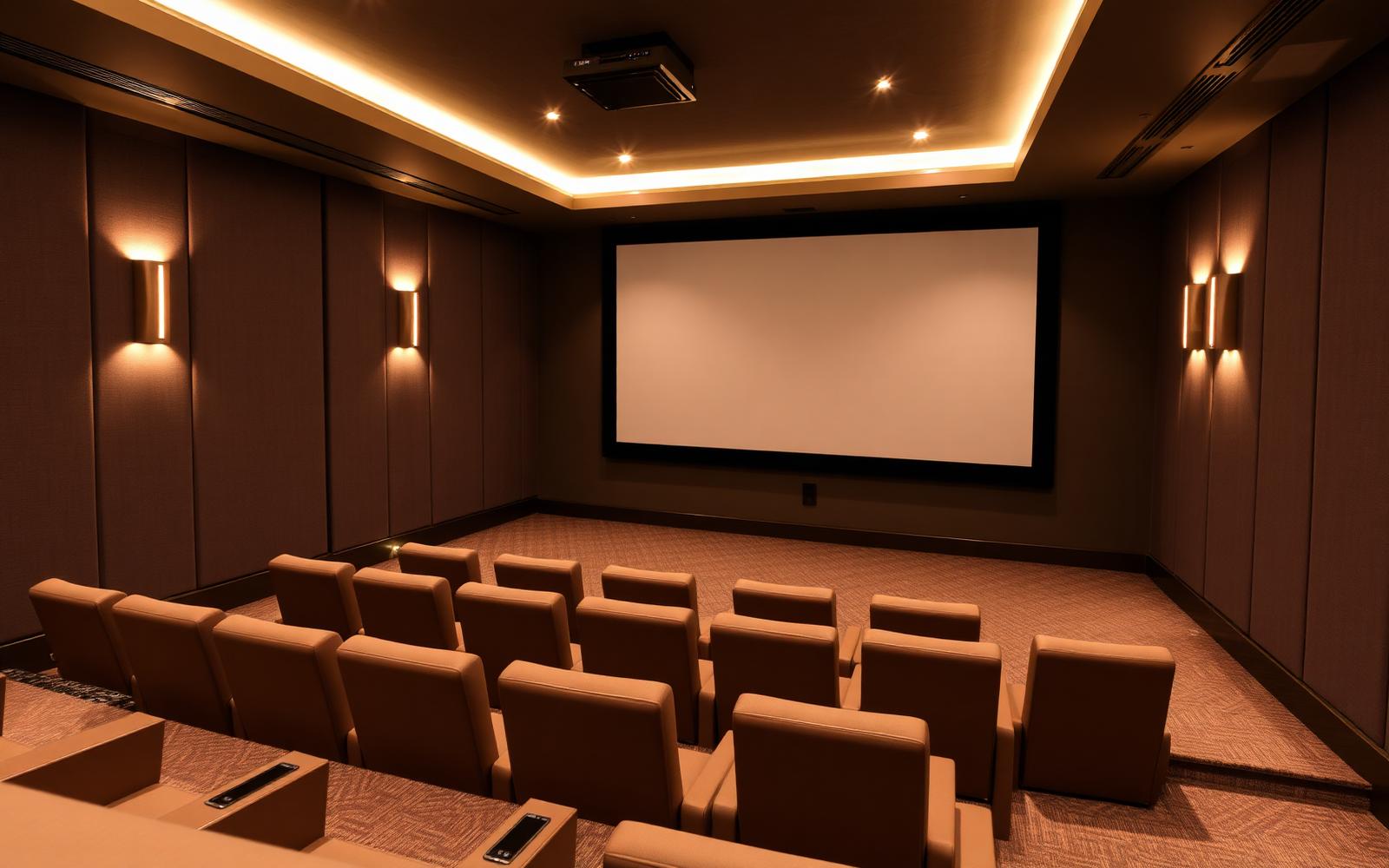
You want a rectangle, the screen on a short wall, no windows if possible, and neighbors on as few sides as you can manage. Interior rooms with no exterior walls are the easiest to control acoustically and thermally.
Ceiling height determines whether tiered seating and in-ceiling surround placement work. Anything under eight feet forces compromises in riser height and sightlines.
- Rectangular plan with the screen on the short wall
- No windows, or full blackout treatment if unavoidable
- Ceiling height sufficient for a seating riser and overhead speakers
- Adjacency to bedrooms considered for sound isolation
- Equipment rack located outside the room, with ventilation
Acoustics before electronics
Three things do most of the work: absorption at the first reflection points on the side walls and ceiling, bass management in the corners, and enough soft surface overall to bring reverberation under control without deadening the room entirely.
Isolation is separate from treatment. Keeping sound inside the theater takes mass, decoupling, and sealed penetrations — resilient channel, double drywall, solid-core doors with proper seals, and sealed boots at every ceiling can.
Projection or a large display
Projection still wins on scale and on the cinematic quality of a large, comfortably bright image in a dark room. It requires light control, a properly sized and gained screen, and a throw distance the room can accommodate.
Large-format displays win in rooms with ambient light, in media rooms that double as living space, and in setups where simplicity matters. In a true dedicated theater, projection remains the reference; in a bonus room used for daytime television as well, a display is usually the better daily experience.
Pre-wire is the deadline that matters
Speaker locations, conduit for projector and screen, HDMI runs with pull strings, rack power and cooling, lighting control zones, and network drops all have to be in the walls before insulation. Retrofitting any of it afterward means opening finished surfaces.
If a theater is even a possibility in a new build or gut renovation, run the infrastructure. The wire is inexpensive during framing and expensive forever after.
More in this section: Charlotte Home Services. Back to the full Sharon Woods guide.
Also in Charlotte Home Services
- Custom Home Builders
Lot selection, budgets, contracts, permitting, and how to judge a Charlotte builder.
- Interior Designers
Scope, fee structures, trade pricing, and when to bring a designer into a project.
- Home Remodeling
Scope, sequence, permits, and budgets for remodeling an older Charlotte house.
- Kitchen Remodeling
Layout, cabinetry grades, stone, appliances, and the lead times that set the schedule.
- Bathroom Remodeling
Waterproofing, layout, tile, and ventilation — the details that decide longevity.
- Luxury Home Builders
What separates a luxury builder from an expensive one, and how to verify it.
- Whole-House Renovations
Down-to-the-studs renovation scope, systems, timelines, and the rebuild threshold.
- Home Additions
Setbacks, lot coverage, foundations, roof tie-ins, and making an addition look original.
- Smart Home Automation
Networking, lighting control, shades, audio, and why integration beats app sprawl.
- Luxury Real Estate
Where Charlotte's upper bracket concentrates and how those properties actually trade.
- Outdoor Living
Porches, terraces, kitchens, and pools built for Charlotte's climate and rainfall.
- The Design Process
Every phase from first conversation to the one-year warranty walk, with real durations.
- New Construction Homes
Production, spec, and custom infill — three different products sold under one phrase.
- Teardown & Rebuild
Lot value, demolition, zoning limits, and the math behind replacing a house.
- Renovation Costs
How renovation budgets are structured, what drives them, and how to read an estimate.
Technology Planning
A theater is engineered before it is decorated
Room dimensions, speaker placement, acoustic treatment, and ventilation are decided at framing. Retrofitting them after drywall costs multiples of doing it during construction.
That work here is Peters Audio Video — Smart Home, Audio & Video. Visit Peters Audio Video
Affiliated or paid relationship; compensation never buys editorial placement. Full disclosure.
Questions & Answers
Frequently asked questions
Direct answers to what readers most often ask about this section of the guide. Each answer cites the primary source it rests on.
All Sharon Woods questions →What is the best room for a home theater in a Charlotte house?
+
A rectangular interior room with the screen on a short wall, no windows, adequate ceiling height for a seating riser, and neighbors on as few sides as possible. Lower levels on sloped lots and bonus rooms over garages are the two most common Charlotte locations.
Projector or TV for a home theater?
+
Projection for a dedicated, light-controlled room where image scale is the point. A large-format display for media rooms with ambient light or daytime use. The room's light control, not the budget, should drive the decision.
When do theater decisions need to be made during construction?
+
At pre-wire, before insulation and drywall. Speaker placement, conduit, HDMI runs, rack power and cooling, and lighting control zones all live in the walls and are expensive to add later.
Source: ENERGY STAR residential guidance
Does acoustic treatment really matter?
+
It matters more than component upgrades at almost every budget. Absorption at first reflection points, corner bass control, and appropriate overall reverberation do more for intelligibility and imaging than a more expensive receiver will.